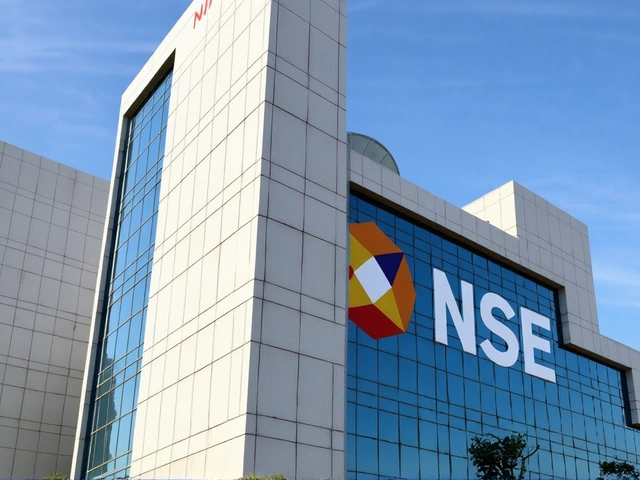
The National Stock Exchange of India opened its electricity futures market on , turning a long-discussed reform into a working reality—and instantly reshaping how India manages its power risk. Within five hours, traders had executed over 4,000 contracts, each representing 50 megawatt-hours (MWh), totaling more than 200 million units of electricity and a turnover of ₹87 crore ($10.4 million). This wasn’t just another product launch. It was the moment India’s power sector finally got a price discovery tool it had been missing for decades.
Why This Matters: From Long-Term Deals to Real-Time Risk Control
For years, India’s electricity market ran on a patchwork of long-term Power Purchase Agreements (PPAs) between generators and distribution companies. These contracts locked in prices for years, shielding both sides from volatility—but also hiding the true cost of power. When monsoons failed, coal prices spiked, or solar output dropped, discoms absorbed the losses. Industrial users? They had no way to hedge against sudden price surges during peak production hours. The result? Unpredictable tariffs, financial stress for state utilities, and hesitation from investors eyeing India’s renewable energy boom. Now, with NSE offering monthly futures contracts, every player—from a wind farm in Rajasthan to a steel plant in Gujarat—can lock in prices months ahead. Settlements are based on the volume-weighted average price from India’s three power exchanges: Indian Energy Exchange (IEX), Hindustan Power Exchange, and Power Exchange India Limited (PXIL). No physical delivery. Just cash settlement. Clean. Transparent. Efficient.The Numbers Tell the Story
The early traction was startling. By , just three months after launch, NSE had recorded 3.16 lakh lots traded—equivalent to 15.98 billion units of electricity. Daily futures volume had nearly caught up to the spot market, something analysts say is rare in emerging markets. "It’s encouraging," said Ahuja, Head of Power and Energy Markets at NSE. "When futures volume approaches spot volume, you know the market is pricing risk correctly. That’s when real investment flows begin." The contracts, each representing 50 MWh (or 50,000 units), are quoted in rupees per MWh. Margins are set at 10%, striking a balance between accessibility and risk control. To jumpstart participation, NSE waived transaction fees for six months and launched a Liquidity Enhancement Scheme in early July. Market makers were selected through a competitive bid process—ensuring tight spreads and deep liquidity from day one.Regulatory Alignment: SEBI and CERC’s Rare Partnership
This launch didn’t happen in a vacuum. It was the result of a delicate, years-long negotiation between two powerful regulators: the Securities and Exchange Board of India (SEBI) and the Central Electricity Regulatory Commission (CERC). SEBI, which oversees financial markets, was granted authority over financial electricity derivatives. CERC retained control over physical delivery contracts. It’s an unusual division of labor—but one that finally brings clarity to a historically murky space. "This is the first time SEBI and CERC have aligned their mandates so cleanly," said an energy policy expert familiar with the talks. "Before, there was regulatory overlap. Now, financial risk stays with SEBI. Physical supply stays with CERC. Everyone knows their lane." Even more telling: MCX, India’s commodity exchange, launched its own electricity futures just four days before NSE. The competition is healthy. It signals that India’s energy market is maturing—and that institutional investors are watching closely.Why This Is a Game Changer for Climate Finance
India’s net-zero pledge isn’t just aspirational. It’s a financial imperative. According to a Niti Aayog report, the country needs over $250 billion annually in climate investment until 2047. By 2030, renewables are expected to make up more than half of installed capacity—solar, wind, and storage. But investors won’t put that kind of money into a market where prices swing unpredictably. Electricity futures fix that. They turn intermittent energy into a bankable asset. A solar developer in Tamil Nadu can now lock in a price for power five months out. A battery storage firm can hedge against price spikes during evening peaks. Global funds can finally invest with confidence. "This isn’t about trading electricity," Ahuja explained. "It’s about de-risking the entire value chain. From generation to distribution. From coal to green hydrogen. Without price certainty, you don’t get capital. Without capital, you don’t get decarbonization."What’s Next? Quarterly, Yearly, and Renewable CFDs
The monthly contracts are just the beginning. NSE plans to roll out quarterly and yearly futures by mid-2026. Even more significant: Contracts for Difference (CFDs) tailored specifically for renewable energy are in the pipeline. These will allow investors to speculate on or hedge against the performance of solar and wind without owning physical assets—opening the door for global ESG funds and infrastructure investors. The ultimate goal? To bring India’s exchange-traded electricity volume from the current 8% of total consumption up to 50%, matching European benchmarks. That’s not a fantasy. It’s a target. And with NSE already hitting daily volume parity with the spot market, the path is clear.Frequently Asked Questions
How do electricity futures help industrial consumers save money?
Industrial users can now lock in electricity prices months in advance, avoiding sudden spikes during peak demand or fuel shortages. For example, a textile mill in Surat that pays ₹12 per unit in summer can hedge at ₹9.50 for October through NSE futures, stabilizing production costs. This reduces reliance on unpredictable spot market purchases and improves budgeting accuracy.
Why is the settlement price based on three exchanges?
By using the volume-weighted average from IEX, Hindustan Power Exchange, and PXIL, NSE ensures the benchmark reflects real supply-demand across thermal, hydro, and renewable sources. This prevents manipulation and gives a true national price signal. It’s the same logic behind the Nifty 50 index—transparency through aggregation.
What’s the difference between NSE and MCX electricity futures?
NSE’s contracts are cash-settled and aligned with financial market standards, targeting institutional investors and utilities. MCX’s contracts are physically deliverable, appealing more to traders and commodity speculators. NSE’s focus on liquidity, lower margins, and CFDs later on makes it the preferred platform for hedging and long-term planning.
How will this impact electricity tariffs for households?
Direct household tariff changes won’t happen overnight. But as discoms hedge their procurement costs more effectively, they’ll face fewer financial shocks—leading to more stable, predictable tariffs over time. In states like Maharashtra and Tamil Nadu, where discoms are heavily in debt, this could mean fewer emergency surcharges and better grid reliability.
Is this market accessible to small investors?
Currently, contracts are sized for institutional players (50 MWh = ₹1.7–2.5 lakh per contract). But NSE plans to introduce mini-contracts (5 MWh) by 2026, potentially allowing retail investors through brokers. Until then, mutual funds or ETFs tracking the power index may offer indirect access.
What role do renewable energy CFDs play in India’s net-zero strategy?
Renewable CFDs will let investors bet on or hedge against the performance of solar and wind without owning physical assets. This attracts global climate funds that want exposure to India’s 500 GW renewable target by 2030 but avoid the complexity of grid integration. CFDs turn intermittent generation into a tradable, bankable commodity—key to unlocking the $250 billion annual investment needed.